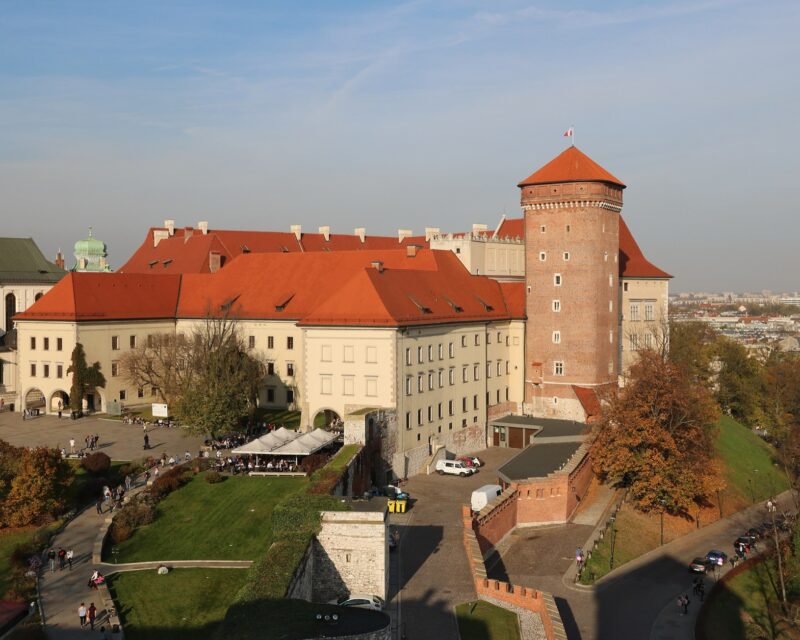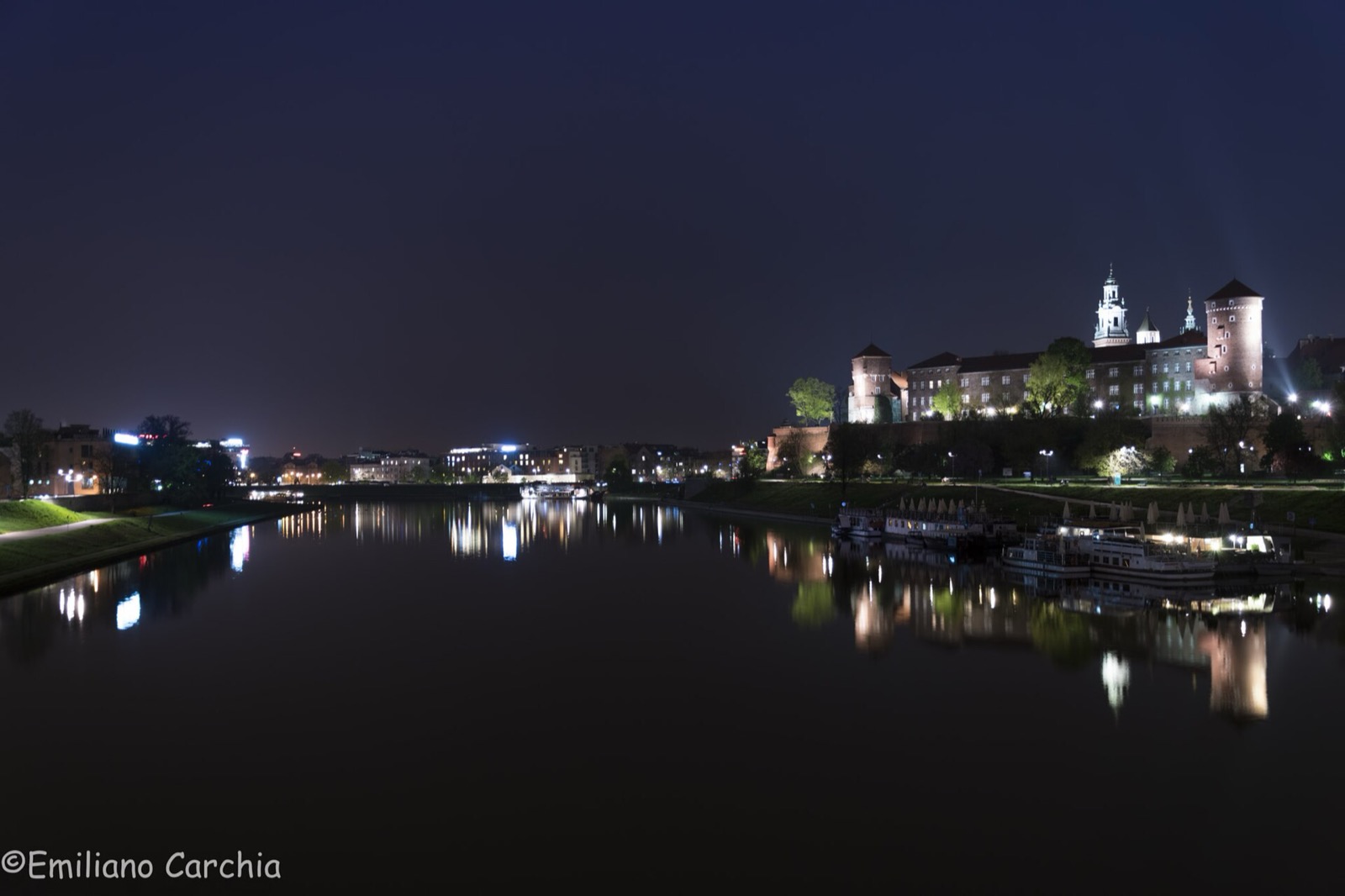
Every city has a symbol. Kraków’s is a dragon — the Smok Wawelski, the Wawel Dragon — and unlike most legends, this one has an address: a cave in the side of Wawel hill, and a fire-breathing statue on the riverbank below it.
The legend
The story goes that in the days of King Krak, the founder of the city, a dragon lived in a den beneath the hill and terrorised the countryside, devouring livestock and the occasional unlucky maiden. Knights tried and failed to kill it. In the end it was not a knight who won but a poor shoemaker’s apprentice named Skuba, who stuffed a lamb with sulphur and left it outside the cave. The dragon ate it, was seized by an unbearable thirst, and drank from the Vistula until it burst. The city was saved, and the shoemaker, in most tellings, married the princess.
It is a folk tale, of course — but Wawel really was inhabited long before recorded history, and the cave really is there.
The Dragon’s Den
You can walk through it. The Dragon’s Den (Smocza Jama) is a real limestone cave that runs down through the hill and comes out at the river. It is a short, atmospheric descent, it opens seasonally, and it is a favourite with children — the perfect light note after the grand indoor exhibitions.
The dragon that breathes fire
At the bottom, on the riverbank, stands the bronze Wawel Dragon statue, a modern sculpture with seven heads and a party trick: every few minutes it breathes real fire. Children love it, and it is free to watch. Text-message a certain number, so the story goes, and it will breathe on demand — but you rarely have to wait long.
Make it part of a Wawel visit
The Den is a natural way to end a morning on the hill: see the State Rooms and the Crown Treasury above, then walk down through the dragon’s cave to the river and let the youngest members of the party meet the dragon itself. Add the Dragon’s Den to your Wawel tickets when you book.